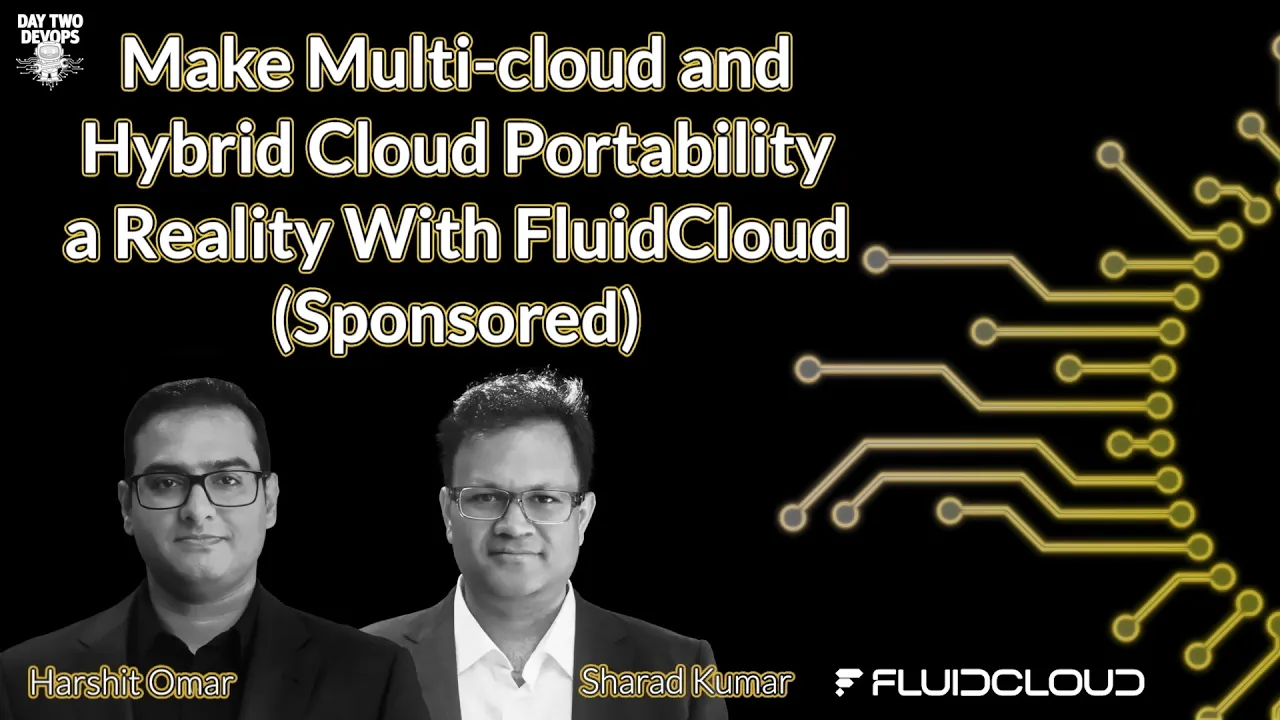
Make Multi-Cloud and Hybrid Cloud Portability a Reality with FluidCloud
packetpushers
Transcript
0:00
Everyone was happy. But when we got acquired and then the integration came in, it took almost 9 months for us to move from AWS one account to another account.
0:18
Welcome to Day2 DevOps, where the Dev Oops is in the details. I'm Ned Belvant, and I'm joined by my copacetic co-host, Kyler Middleton.
0:26
Hey, Kyler. Hi, Ned. I have to Google Copathetic.
0:30
Today we have a sponsored episode with Fluid Cloud and they're here to talk about multicloud and hybrid cloud portability.
0:42
Migrations can be painful. Even moving IAM policies can be difficult.
0:51
We’ll talk with Fluid Cloud founders Sherad Kumar and Harshed Omar about easing that pain.
1:05
Introduction of guests and request for background information.
1:19
Sherad introduces himself as CEO and co-founder of Fluid Cloud, describing the company history and partnership.
1:46
Harshett introduces himself as CTO and explains their complementary skillsets and DevOps focus.
2:12
Discussion about their experience with startups and inspiration behind Fluid Cloud.
2:34
Story of previous company acquisition (Acurix) and the pain of cloud migration taking 9 months.
3:00
Explanation of migration challenges, security blockers, and idea of automation.
3:32
Research into migration pain points, ecosystem, and founding Fluid Cloud in August 2024.
4:01
Industry changes (BSL license, VMware acquisition, geopolitics) driving multicloud demand.
4:48
Host shares consulting experience with slow and complex migrations.
5:33
Discussion of real-world challenges: security constraints, pipelines, and complexity.
6:12
Differences between AWS, Azure, GCP APIs and complexity of multi-cloud knowledge.
6:53
Challenges with Terraform state files and lack of consolidation.
7:32
Data migration complexity and tooling limitations.
8:11
Unknown incompatibilities and surprises during migrations.
8:53
Discussion on vendor lock-in and difficulty leaving cloud providers.
9:25
Handling proprietary services like AWS Aurora and migration trade-offs.
10:01
Fluid Cloud compatibility scoring and mapping across cloud providers.
10:37
Explanation of IaaS vs PaaS portability challenges.
11:21
Enterprises typically use only a subset of cloud services.
12:47
Example case: migration reduced from 8 weeks to 1 day for infrastructure.
13:30
Discovery and scanning speed improvements (100k resources in 60 seconds).
14:49
Importance of identifying incompatibilities early.
15:32
Cost optimization and decision-making using compatibility scores.
16:13
Use case: moving workloads between regions for cost savings.
17:30
VMware pricing changes and motivation for migration.
18:10
Support for VMware to cloud or Nutanix migrations.
19:19
Focus on infrastructure layer only (not app/data).
20:06
Automation of networking rules and IAM migration.
21:20
Terraform output and deployment flexibility.
22:03
Importance of Terraform state synchronization and versioning.
23:02
Clarification on resilience vs simple infrastructure scanning.
24:22
IAM and permissions mapping challenges across clouds.
25:00
Example of automating 1500 users and 200 roles migration.
26:00
Deep technical discussion on IAM differences between AWS and Azure.
27:02
Handling resource groups and permissions mapping logic.
28:00
Custom roles vs managed roles complexity.
29:10
Explanation of landing zones and infrastructure cloning.
30:00
Analogy of cloud migration as moving water between bottles.
31:55
Advanced landing zone creation matching source environment.
33:07
Use case: tenant sharding and environment replication.
34:03
Enterprise use cases with constant restructuring and M&A.
35:07
Consulting example of VMware migration challenges.
36:05
Cloud vendor incentives and switching behavior.
37:31
Redefining true multicloud vs just using multiple clouds.
38:16
Cloud sync feature for cross-cloud deployments.
39:18
Example of multi-cloud customer requirement.
40:05
Startup challenges adapting to different cloud providers.
41:01
Contact information and demo instructions.
41:37
Closing remarks and community links.
42:28
Podcast outro and community invitation.
Transcript
0:00
Everyone was happy. But when we got acquired and then the integration came in, it took almost 9 months for us to move from AWS one account to another account.
0:18
Welcome to Day2 DevOps, where the Dev Oops is in the details. I'm Ned Belvant, and I'm joined by my copacetic co-host, Kyler Middleton.
0:26
Hey, Kyler. Hi, Ned. I have to Google Copathetic.
0:30
Today we have a sponsored episode with Fluid Cloud and they're here to talk about multicloud and hybrid cloud portability.
0:42
Migrations can be painful. Even moving IAM policies can be difficult.
0:51
We’ll talk with Fluid Cloud founders Sherad Kumar and Harshed Omar about easing that pain.
1:05
Introduction of guests and request for background information.
1:19
Sherad introduces himself as CEO and co-founder of Fluid Cloud, describing the company history and partnership.
1:46
Harshett introduces himself as CTO and explains their complementary skillsets and DevOps focus.
2:12
Discussion about their experience with startups and inspiration behind Fluid Cloud.
2:34
Story of previous company acquisition (Acurix) and the pain of cloud migration taking 9 months.
3:00
Explanation of migration challenges, security blockers, and idea of automation.
3:32
Research into migration pain points, ecosystem, and founding Fluid Cloud in August 2024.
4:01
Industry changes (BSL license, VMware acquisition, geopolitics) driving multicloud demand.
4:48
Host shares consulting experience with slow and complex migrations.
5:33
Discussion of real-world challenges: security constraints, pipelines, and complexity.
6:12
Differences between AWS, Azure, GCP APIs and complexity of multi-cloud knowledge.
6:53
Challenges with Terraform state files and lack of consolidation.
7:32
Data migration complexity and tooling limitations.
8:11
Unknown incompatibilities and surprises during migrations.
8:53
Discussion on vendor lock-in and difficulty leaving cloud providers.
9:25
Handling proprietary services like AWS Aurora and migration trade-offs.
10:01
Fluid Cloud compatibility scoring and mapping across cloud providers.
10:37
Explanation of IaaS vs PaaS portability challenges.
11:21
Enterprises typically use only a subset of cloud services.
12:47
Example case: migration reduced from 8 weeks to 1 day for infrastructure.
13:30
Discovery and scanning speed improvements (100k resources in 60 seconds).
14:49
Importance of identifying incompatibilities early.
15:32
Cost optimization and decision-making using compatibility scores.
16:13
Use case: moving workloads between regions for cost savings.
17:30
VMware pricing changes and motivation for migration.
18:10
Support for VMware to cloud or Nutanix migrations.
19:19
Focus on infrastructure layer only (not app/data).
20:06
Automation of networking rules and IAM migration.
21:20
Terraform output and deployment flexibility.
22:03
Importance of Terraform state synchronization and versioning.
23:02
Clarification on resilience vs simple infrastructure scanning.
24:22
IAM and permissions mapping challenges across clouds.
25:00
Example of automating 1500 users and 200 roles migration.
26:00
Deep technical discussion on IAM differences between AWS and Azure.
27:02
Handling resource groups and permissions mapping logic.
28:00
Custom roles vs managed roles complexity.
29:10
Explanation of landing zones and infrastructure cloning.
30:00
Analogy of cloud migration as moving water between bottles.
31:55
Advanced landing zone creation matching source environment.
33:07
Use case: tenant sharding and environment replication.
34:03
Enterprise use cases with constant restructuring and M&A.
35:07
Consulting example of VMware migration challenges.
36:05
Cloud vendor incentives and switching behavior.
37:31
Redefining true multicloud vs just using multiple clouds.
38:16
Cloud sync feature for cross-cloud deployments.
39:18
Example of multi-cloud customer requirement.
40:05
Startup challenges adapting to different cloud providers.
41:01
Contact information and demo instructions.
41:37
Closing remarks and community links.
42:28
Podcast outro and community invitation.
Other podcasts
The End of Cloud Vendor Lock-In & Future of Multi-cloud! | Fluidcloud | Ctrl Alt Podcast
Ctrl Alt Podcast With Vida Patil
Mar 11, 2026
Learn more
Connected by Wives, and United by Startups, with Sharad & Harshit of Fluidcloud
indie hackers
Jan 22, 2026
Learn more
Clouds Without Chains: Sharad Kumar and Harshit Omar, FluidCloud
Trident Talks
Jan 19, 2026
Learn more


4900 Hopyard Rd
Pleasanton CA 94588
4900 Hopyard Rd
Pleasanton CA 94588